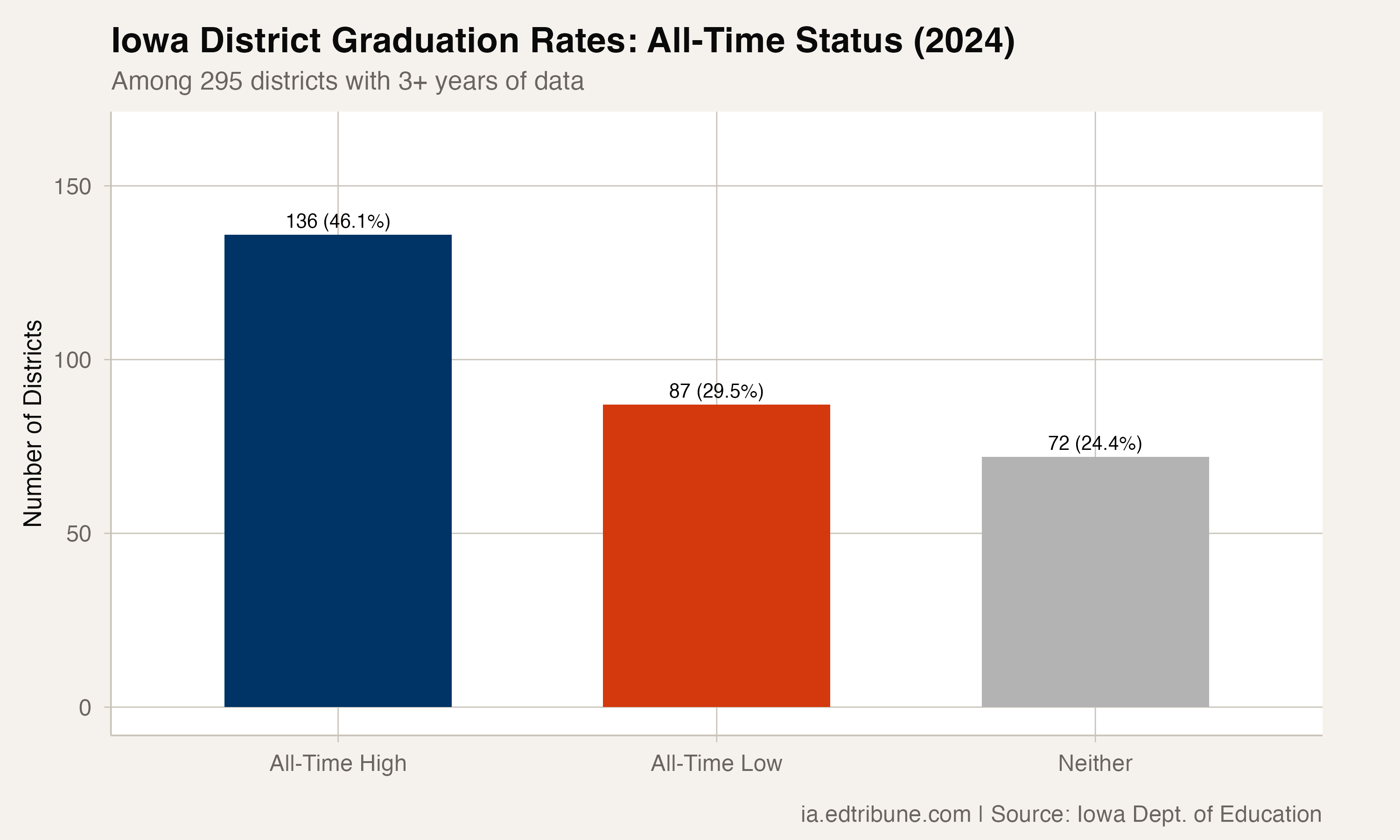
136 Iowa Districts Are at Their All-Time High Graduation Rate
Nearly half of Iowa's school districts hit their highest-ever graduation rate in 2024, while 87 districts posted their worst -- a bifurcated state where the middle ground is thinning.
Hawkeye State Education Coverage, Driven by Data
Education News & Data
Local education reporting from every corner of Iowa, grounded in Iowa Department of Education data.
Des Moines Independent went from 38.7% to 21.2% chronic absenteeism in a single year, removing 5,449 students from the chronically absent rolls.
Iowa City Community School District's chronic-absence rate fell from a 28.0% peak to 10.3% in 2024-25, below its 14.3% 2018-19 rate.
Iowa's meatpacking communities show sharply divergent attendance recovery paths, with Storm Lake stalled at 23.9% and Postville fully recovered to 10.2%.
Des Moines, Davenport, Cedar Rapids, Waterloo, and Sioux City account for 20,801 of Iowa's 76,535 chronically absent students — 27.2% from 17.1% of enrollment.
Nearly half of Iowa's school districts hit their highest-ever graduation rate in 2024, while 87 districts posted their worst -- a bifurcated state where the middle ground is thinning.
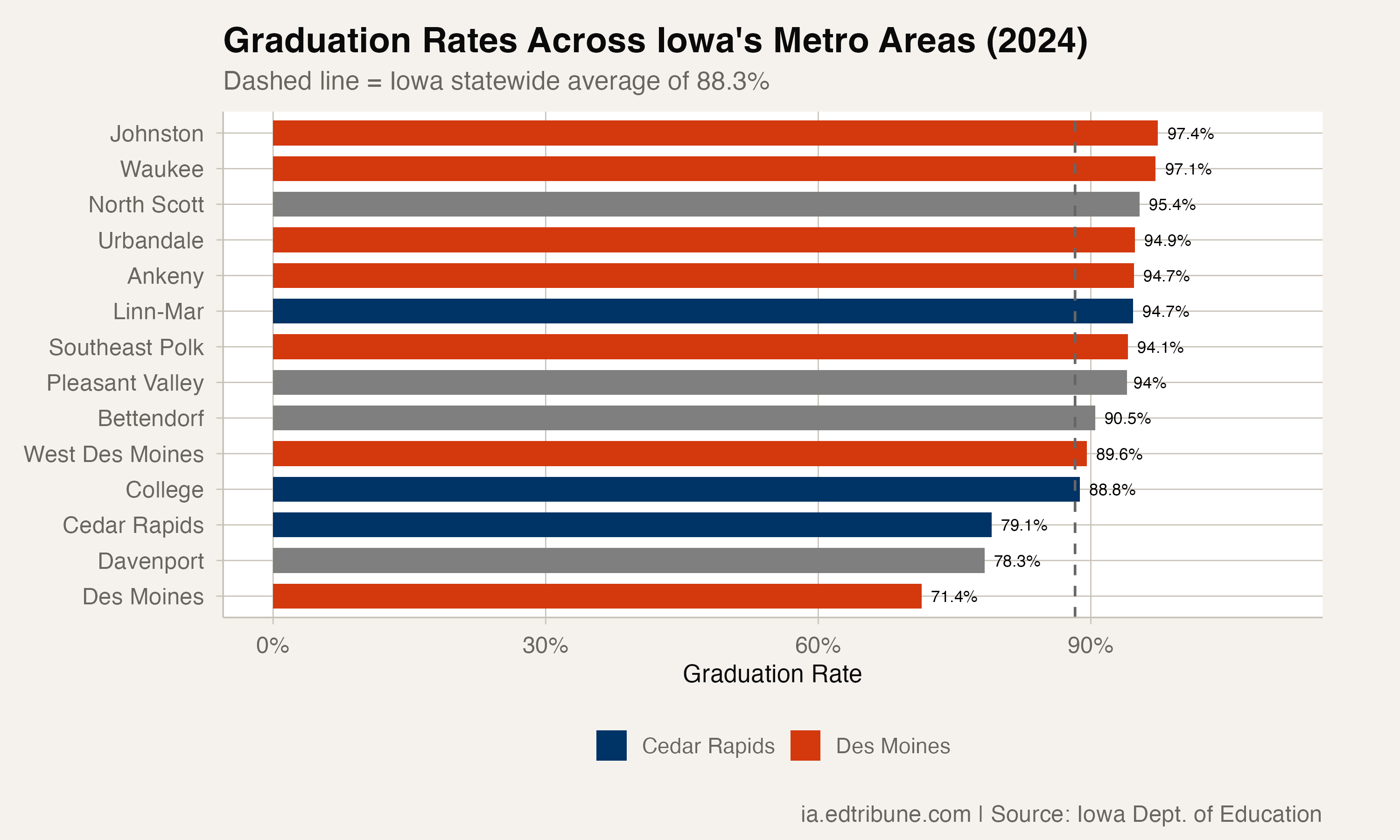
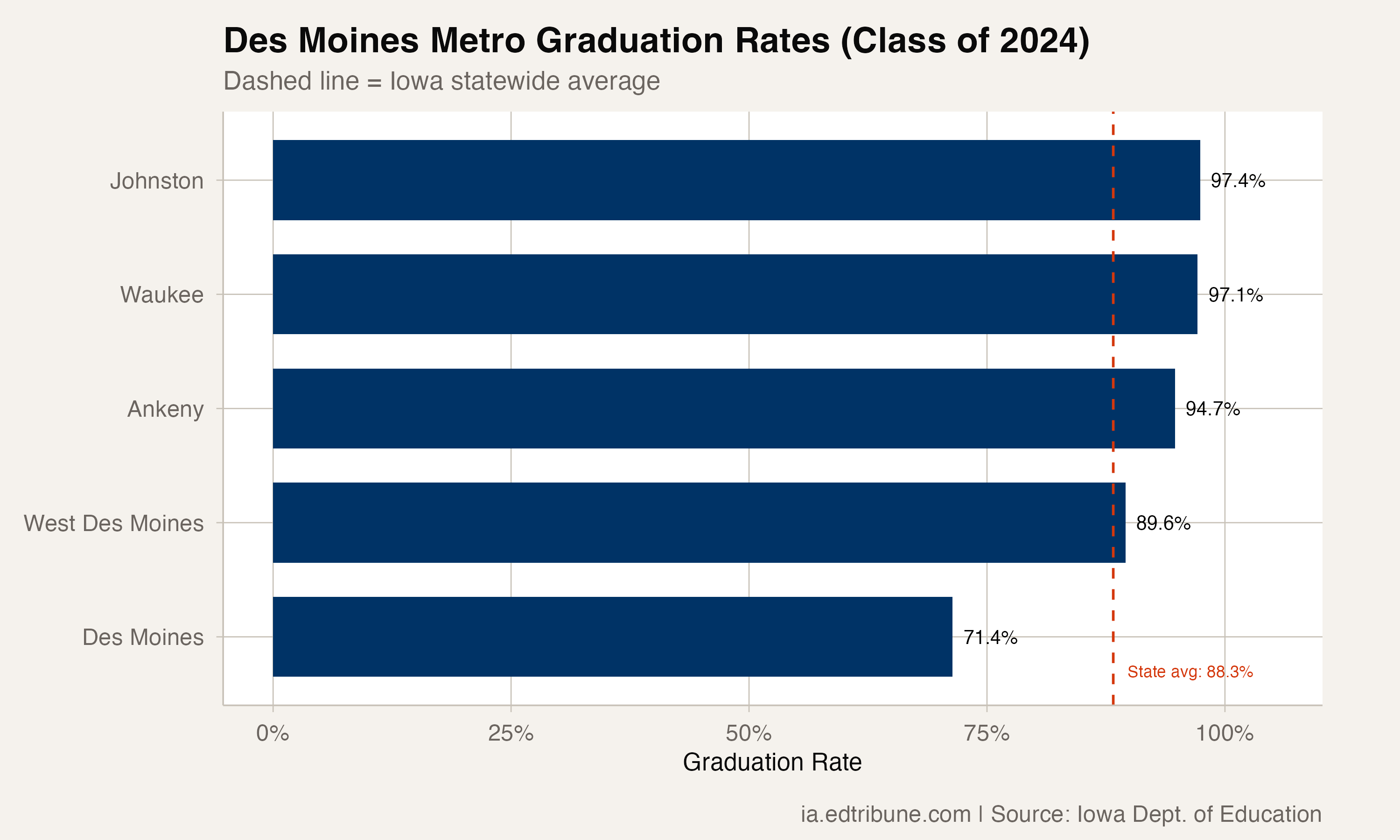
Iowa's graduation story is increasingly a story of geography, with 18- to 26-point gaps between urban cores and surrounding suburbs across the Des Moines, Cedar Rapids, and Quad Cities metros.
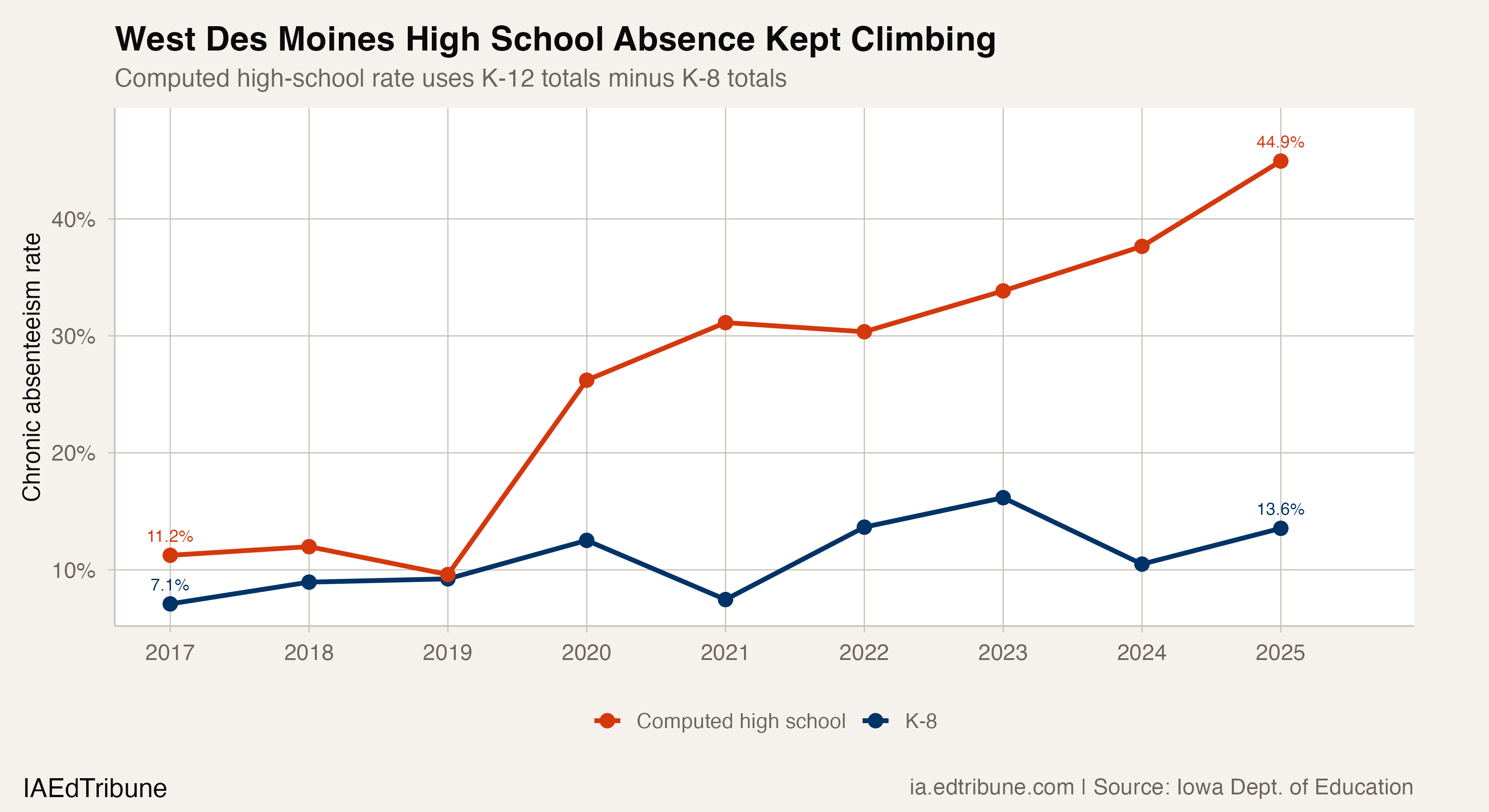
West Des Moines has a 31-point gap between its K-8 and computed high school chronic absence rates, the largest in Iowa's 2025 district data.
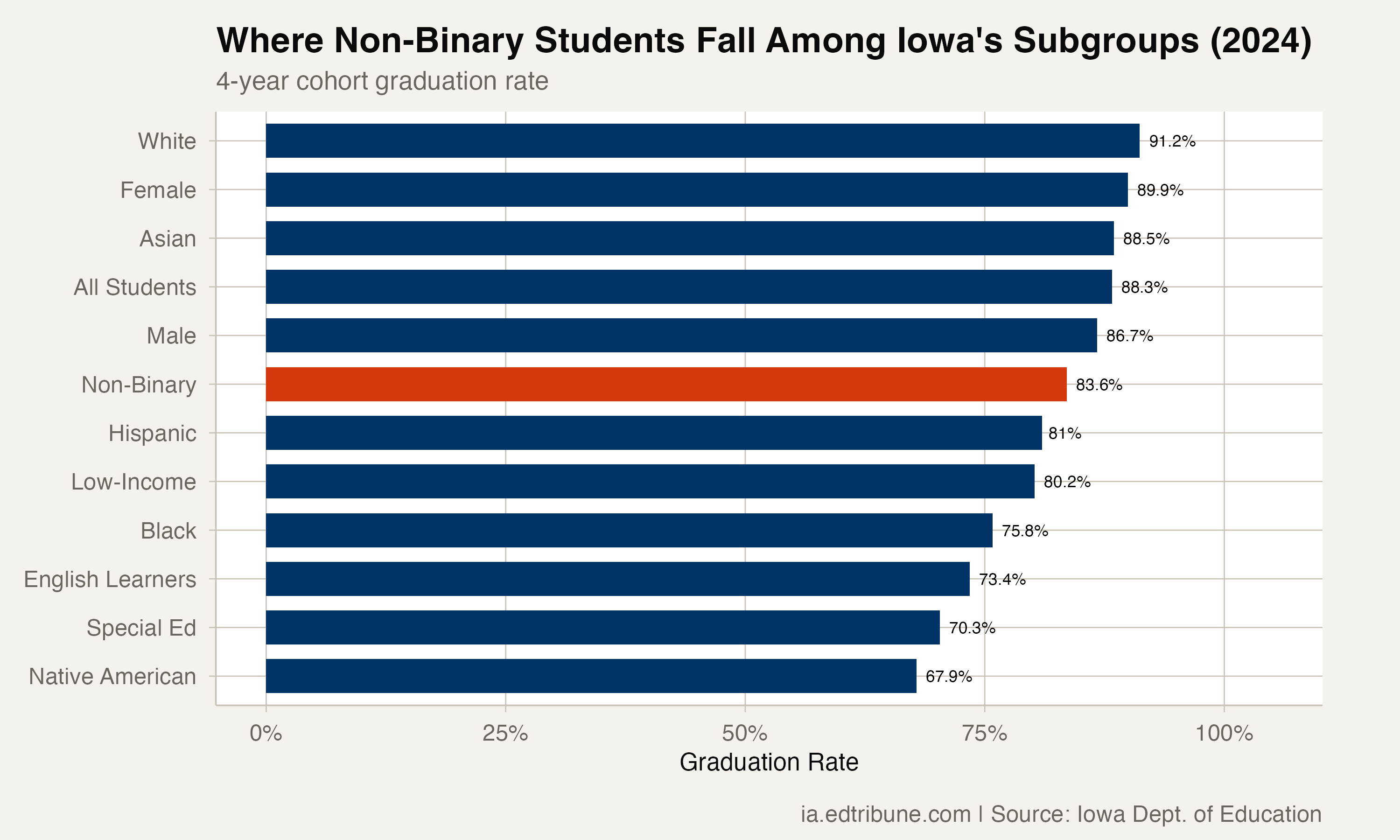
Iowa began reporting graduation rates for non-binary students in 2022, with a cohort that has grown from 15 to 73 students and a rate of 84% in 2024, above Black, English learner, and special education students.
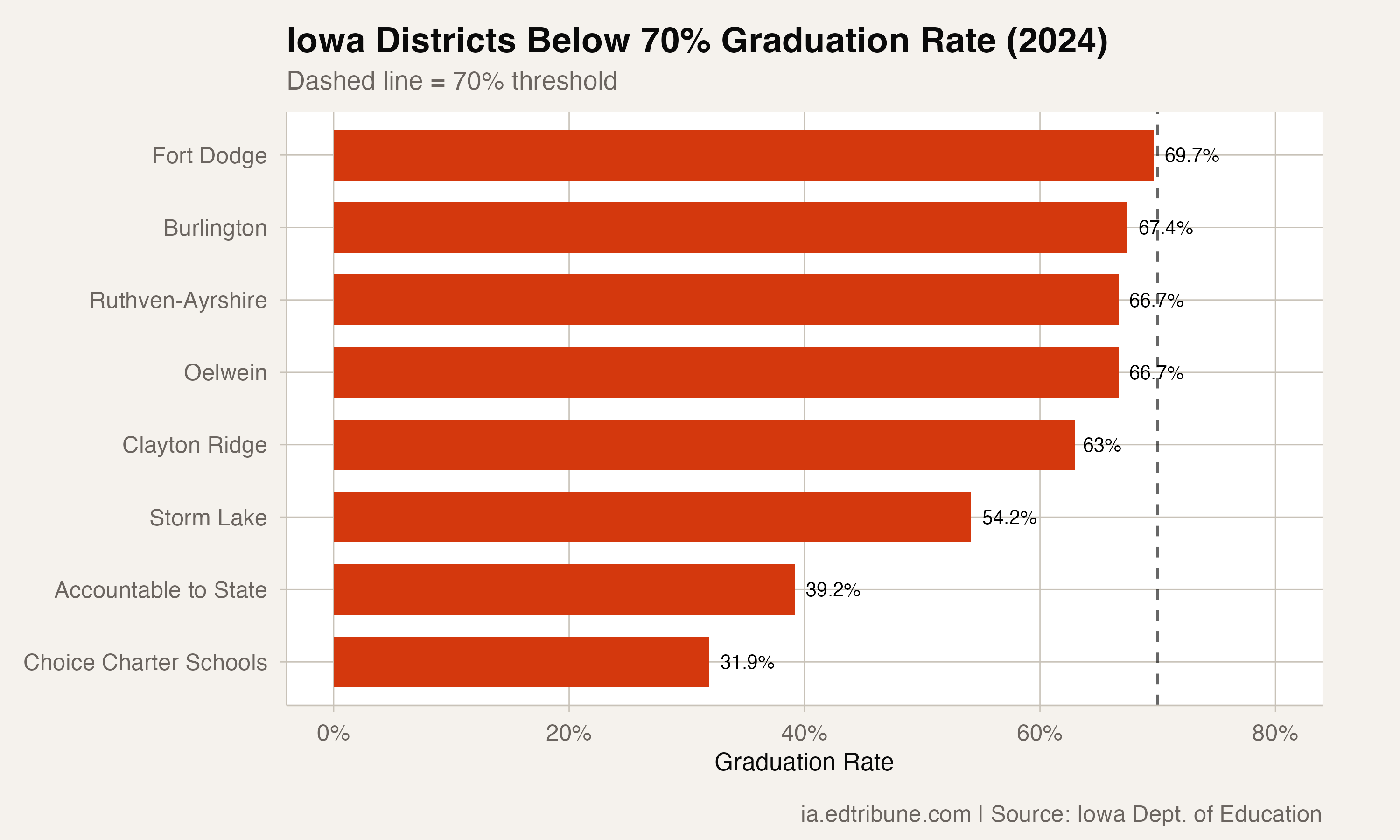
Eight Iowa districts graduated fewer than 70% of students in 2024, double the number from the year before, with Fort Dodge and Burlington among the mid-size districts on the list.
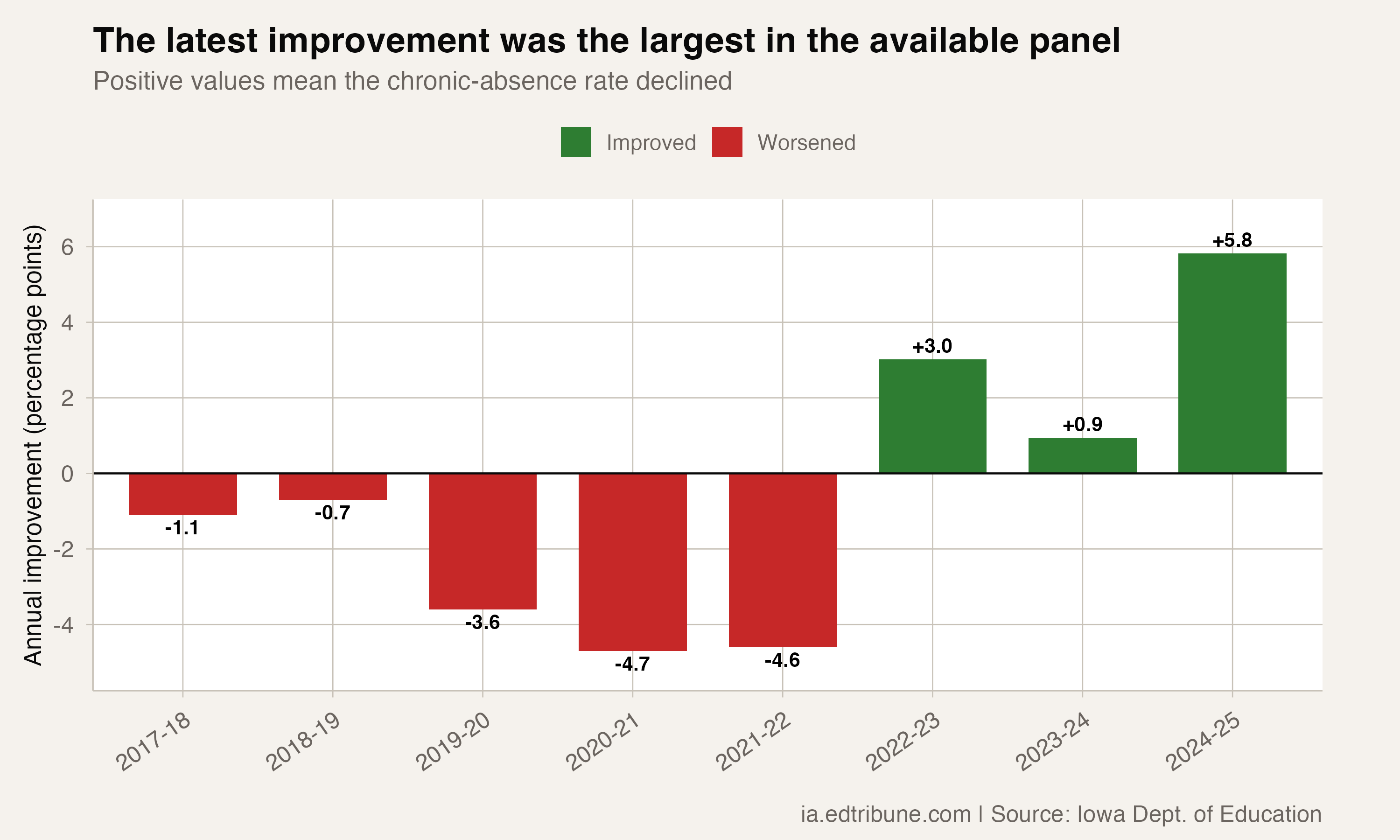
Iowa posted its largest annual chronic-absence improvement in the available record, but the timing alone cannot establish what caused it.
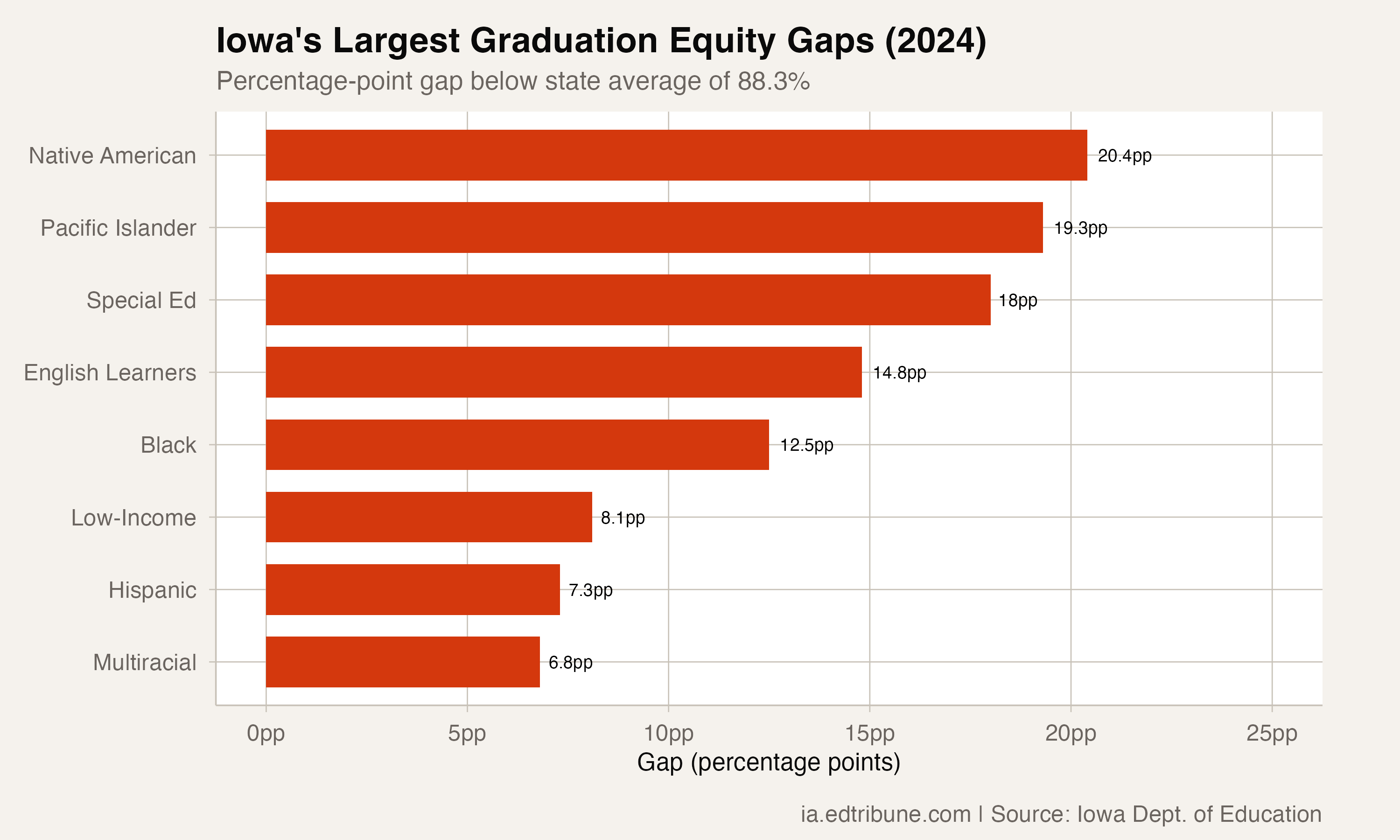
Special education students in Iowa graduate at 70%, 18 points below the state average, and the gap has been stuck between 18 and 20 points for six straight years.
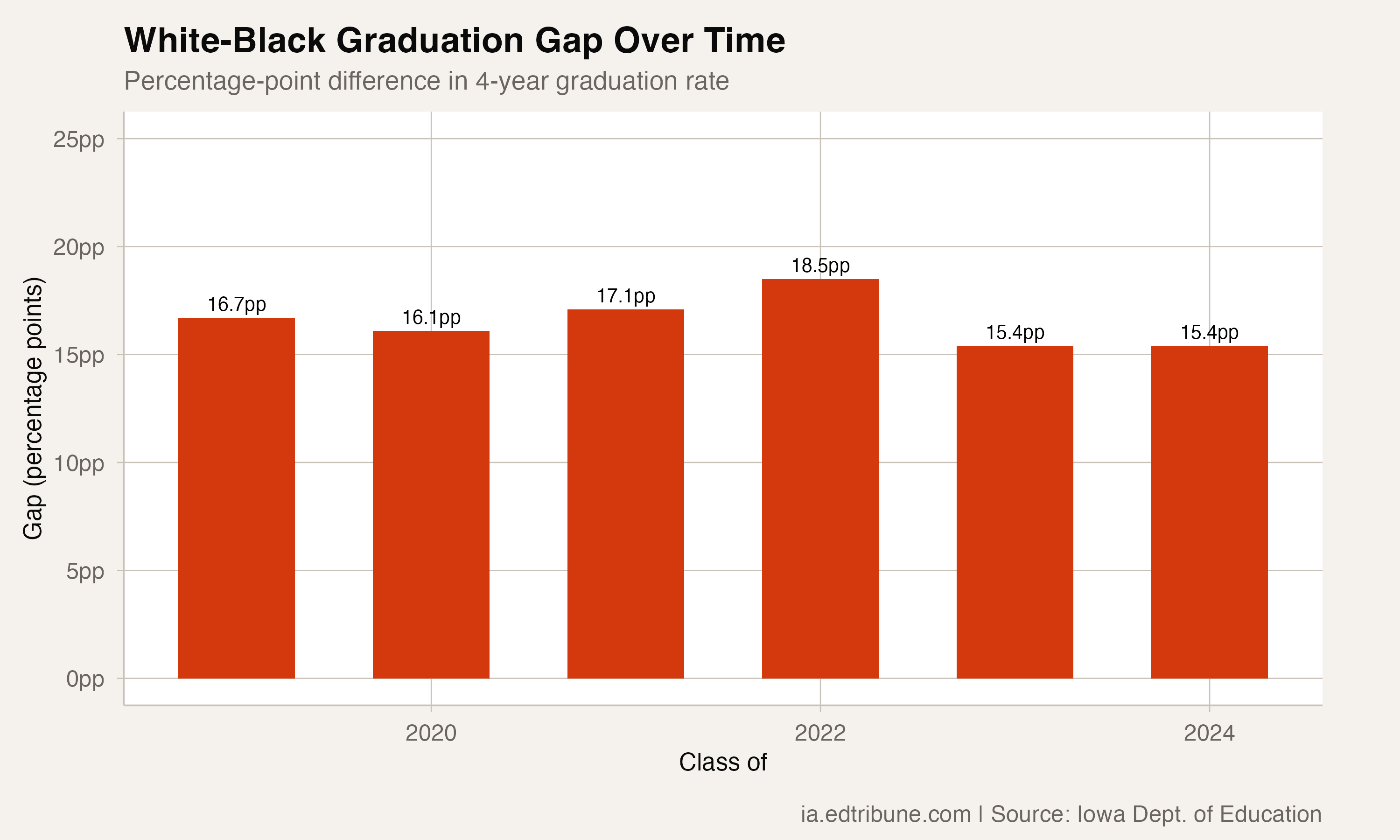
The gap between white and Black graduation rates in Iowa has held steady at 15-18 points for six years, even as the state's overall rate returned to pre-pandemic levels.
Des Moines Independent graduated 71% of students in 2024, down from 76% in 2019, while suburban Johnston and Waukee exceed 97% -- creating a 26-point gap within the same metro area.
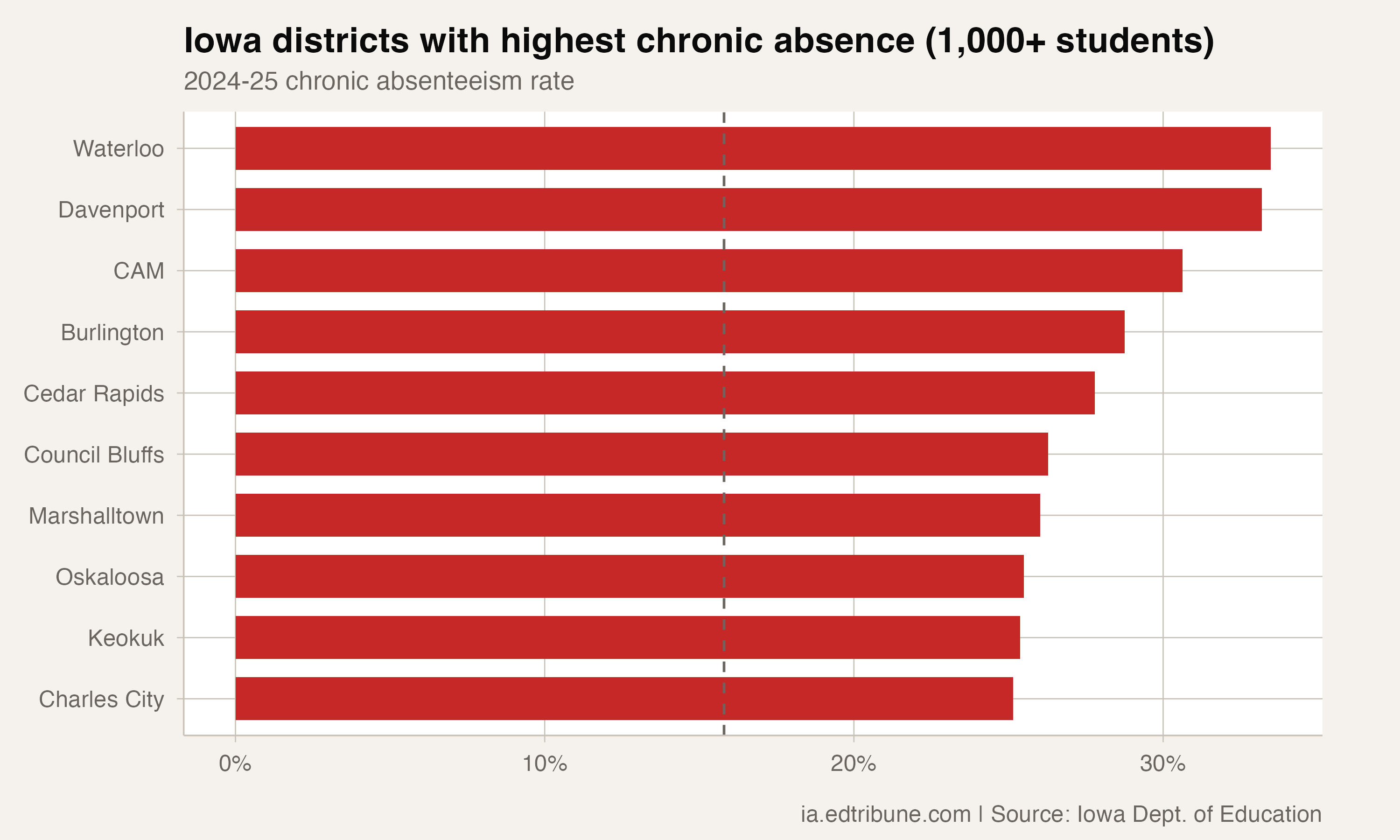
Despite statewide improvement, Waterloo (33.5%) and Davenport (33.2%) still have one in three students chronically absent, more than double the state average.
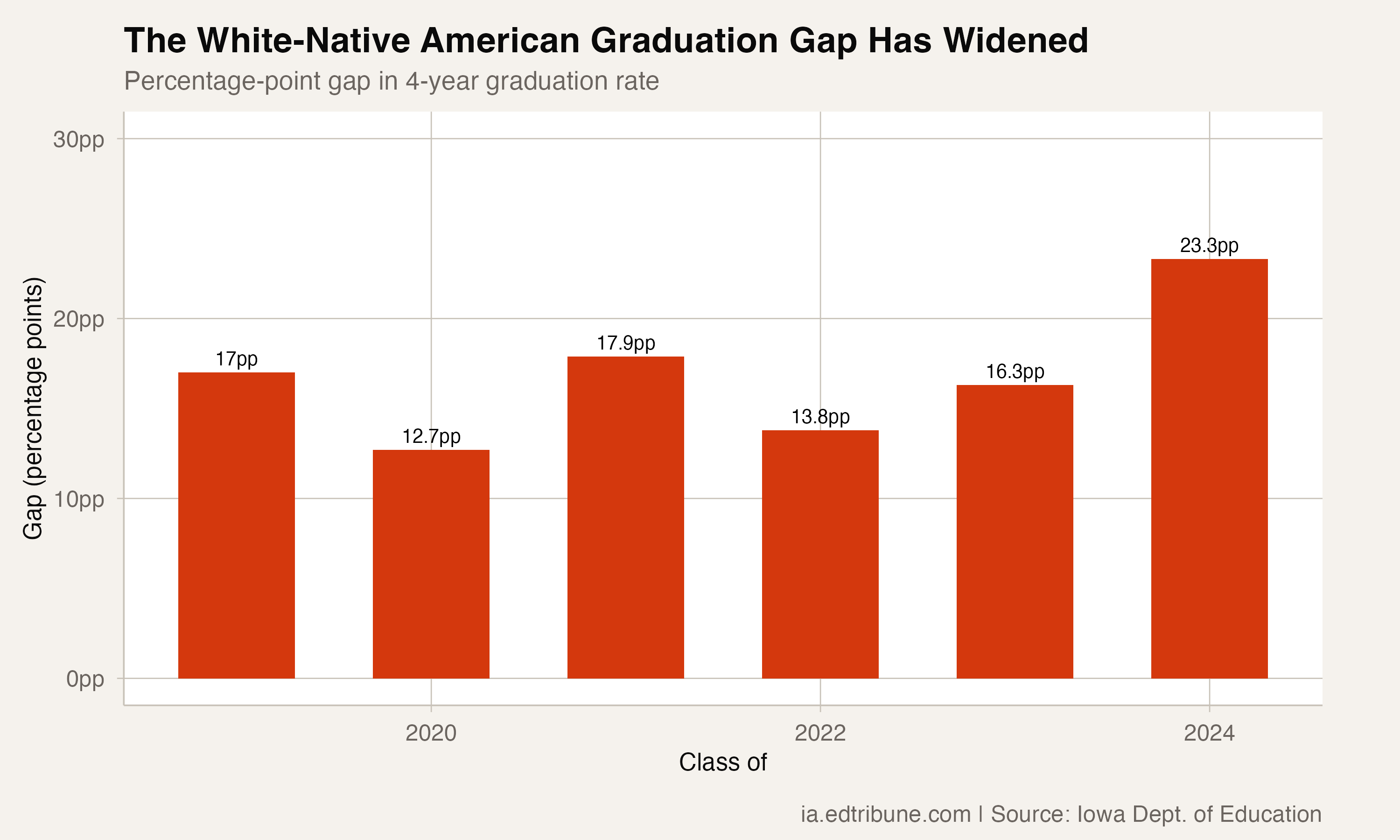
Native American students in Iowa graduated at 68% in 2024, down from 79% in 2020, while the white-Native American gap widened to 23 points -- the largest racial gap in the state.